Click here to go directly to step by step directions
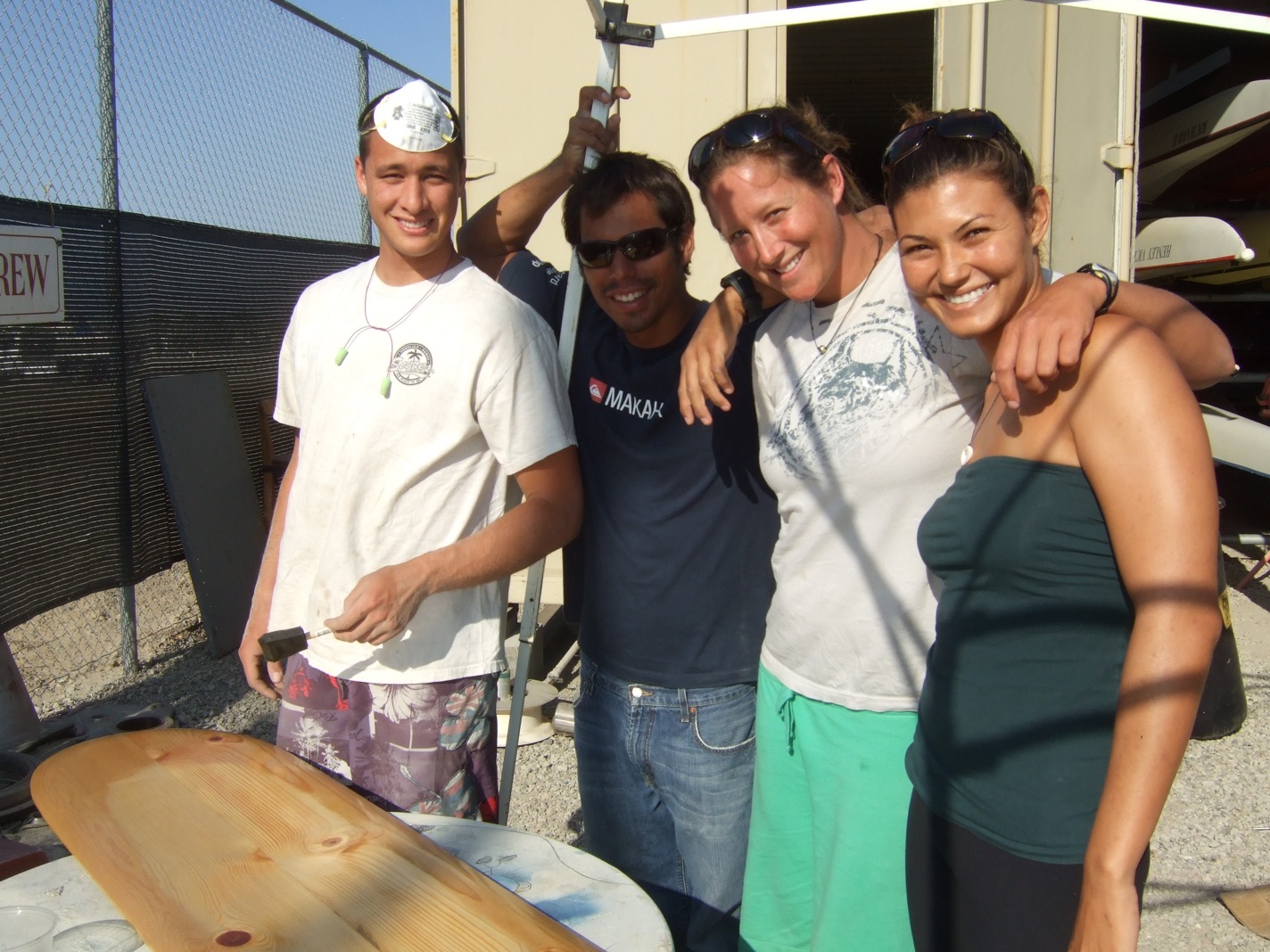 We pulled up into Jbay with a bunch of firewires, a Mccallum Twig (Twinny-Egg), and a Pine Alaia. Roscoe Fowler shaped the pine board as a 6’6″ and while I was in California he let me have a go at it when they came down to SD. We surfed together at Sunset Cliffs, Blacks, Trestles, Salt Creek, and Thalia St. I fell in love with that board and he, like an altruistic individual, bequeathed her to me. Seeing that she wasn’t going to fit into my board bag, we sensitively cut off about a foot and raised her concave. After a quick coat of sealer and sanding she was placed into her padded bag and began her long journey to Jeffreys Bay South Africa.
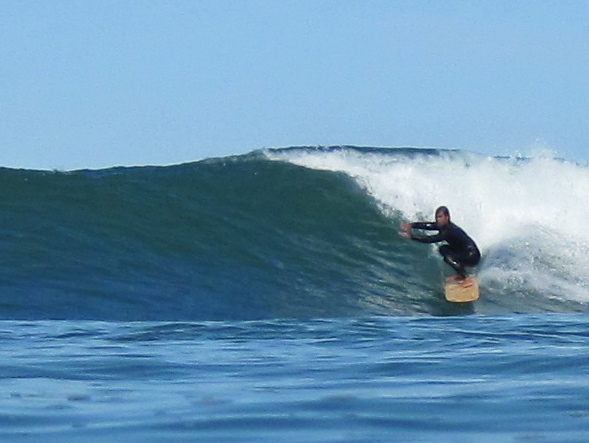
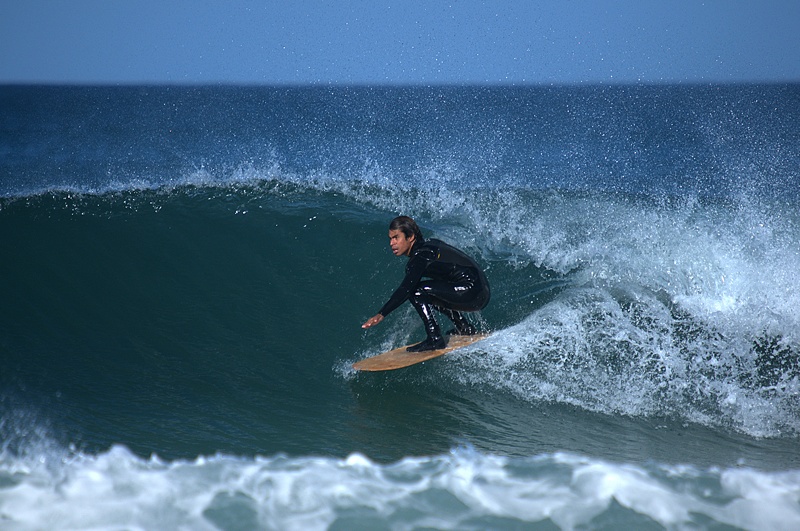
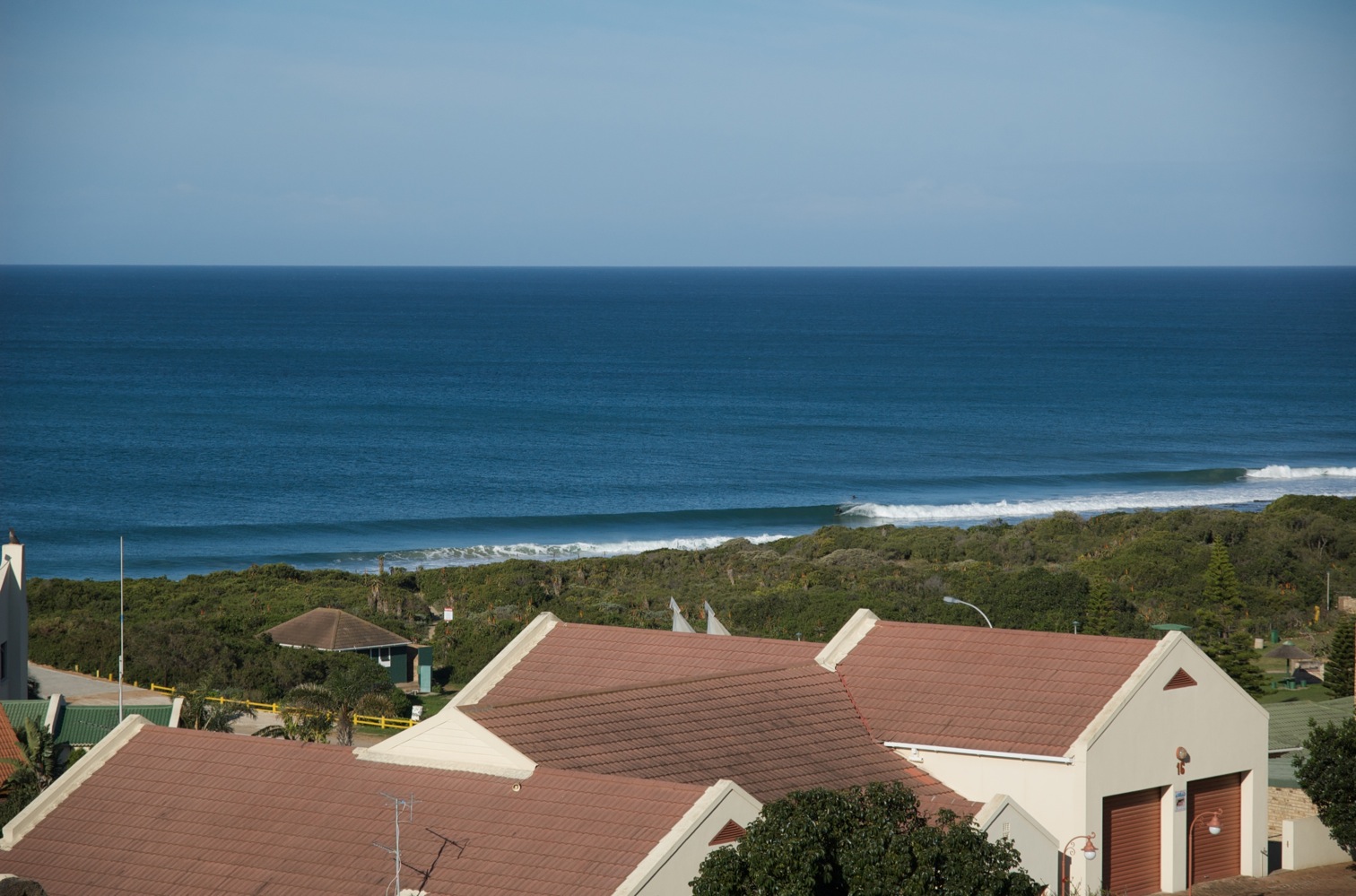
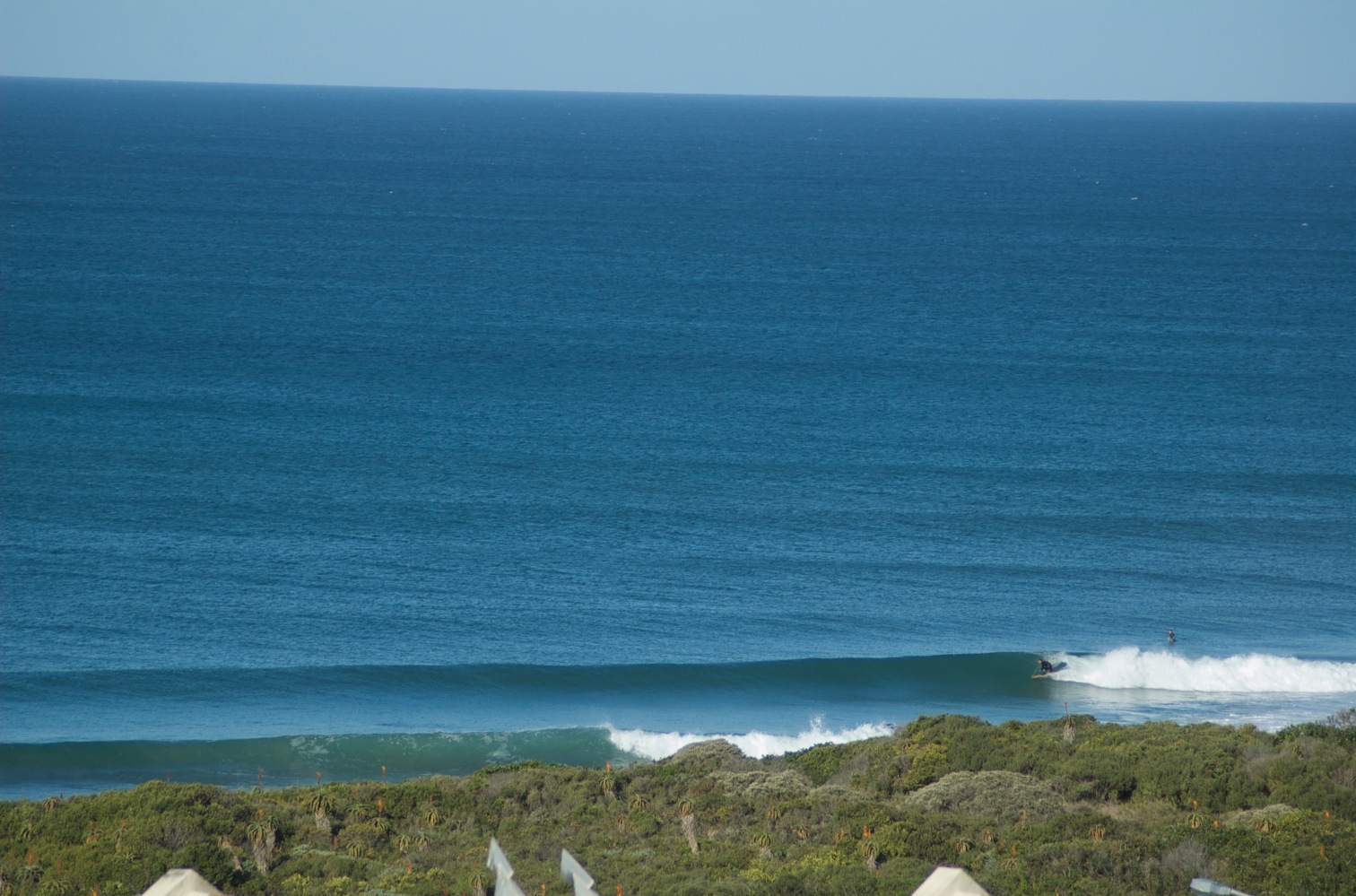
When we arrived in Jeffreys Bay I realized that Surfers Point would be perfect for the Alaia, a long perfectly groomed right. I began surfing the Alaia and had such a great time but soon realized that I’d be able to surf the Alaia at Supertubes. Supertubes is the famous section of Jbay that is a really fast hollow right that can run for hundreds of meters. Riding the Alaia has brought the stoke back to surfing. I feel like a kid just learning and every session I seem to get better. If you are tired of your shortboard, longboard, or fish, then try an Alaia and have the challenge of a new board re-ignite your passion for surfing.
Coincidentally/Serendipitously my neighbors Eves and Katrine had ordered Paulownia blanks and they let me know the order was coming in and that they were looking for some advice. I tried to act like I knew something and was able to fanagle the opportunity to help them shape a few. The blanks came a few days later and on the bottom was one extra. The extra one was used to protect the other pieces, similar to a pallet and it had extra wood screwed into it to create legs. It looked like a reject piece so I offered to buy it from them. They happily obliged and I began shaping my first own Alaia.
The following is how I shaped that Alaia and the other one, more of the story to come. I am not saying this is how you should do it. I am a super green rookie hack but the board I made is unreal. It works like a gem and I am completely satisfied. I am sure that there are other ways to do it and I hope people will comment in order to critique my process and make me and potentially you better at shaping Alaias.

If you are a surfer shaping your own board for the first time then first admit that you are not a shaper and that it doesn’t have to be perfect. If you are looking for perfection have a shaper do it for you, otherwise you’ll be spending too much time making it perfect and too little time riding your creation. Another thing is the symmetry, if you are only going right like I am in Jeffreys Bay then you don’t even really need to shape the outside edge. If its not perfectly symmetrical the board will be fine. Mine is working just fine and lets just say if you folded it in half it wouldn’t perfectly match. Keep in mind you are a surfer and not a shaper, at least not yet. After I’ve finished shaping this one I have realized that I don’t think I’ll ever be a shaper, its really hard.
Step One: Acquire the Wood and Tools
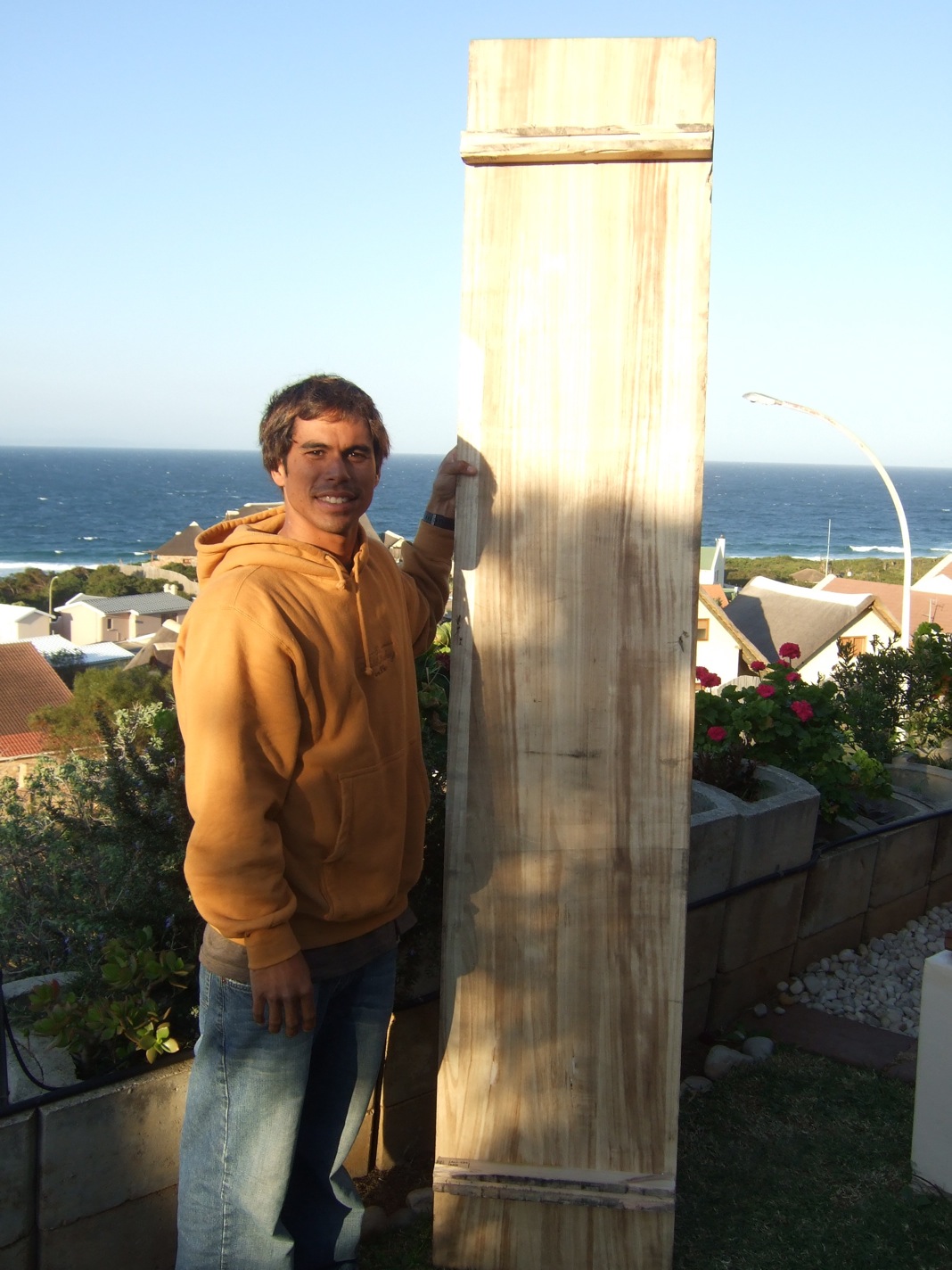 In my case I scored from Eve and Katrine. In your case you can go online to find some Paulownia or you can go to your local hardware shop and get some pine. Others use century plant or other exotic woods. You can pretty much use anything, old furniture, an old door, or recycled timber. You just want to make sure you can keep it from getting waterlogged and that it floats at least a bit.
I got all my tools from the second hand shop.
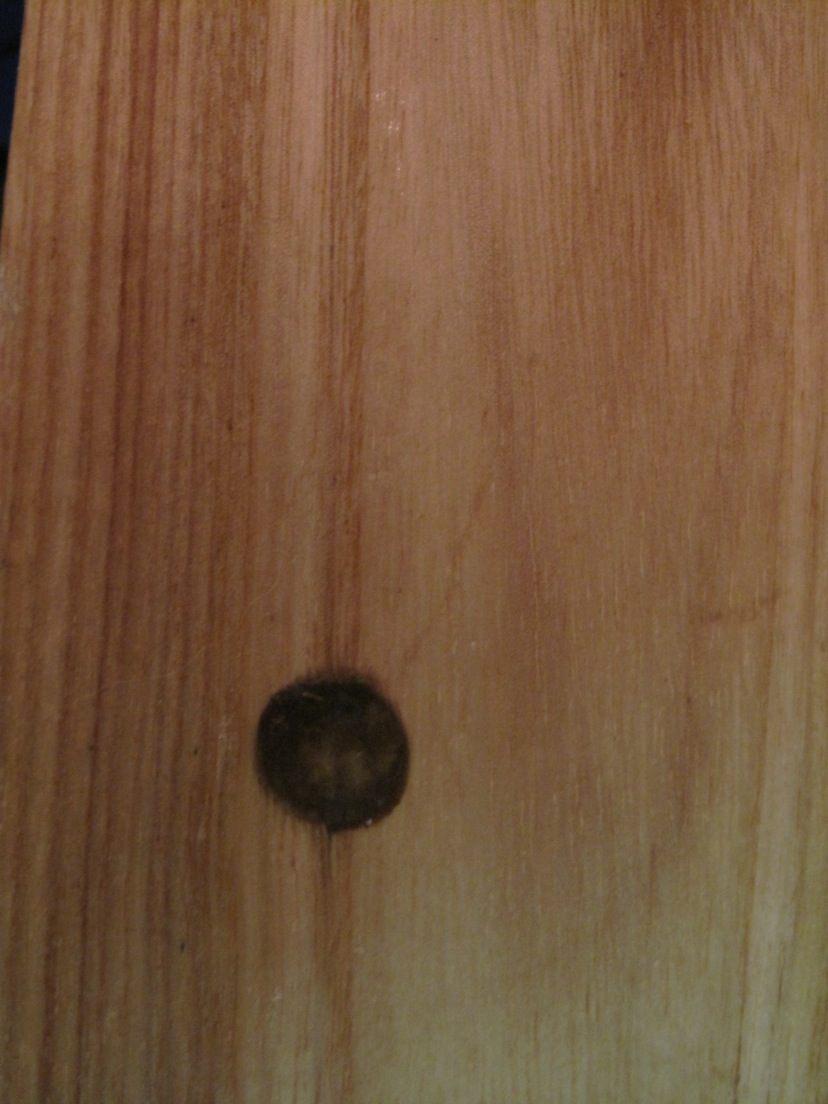
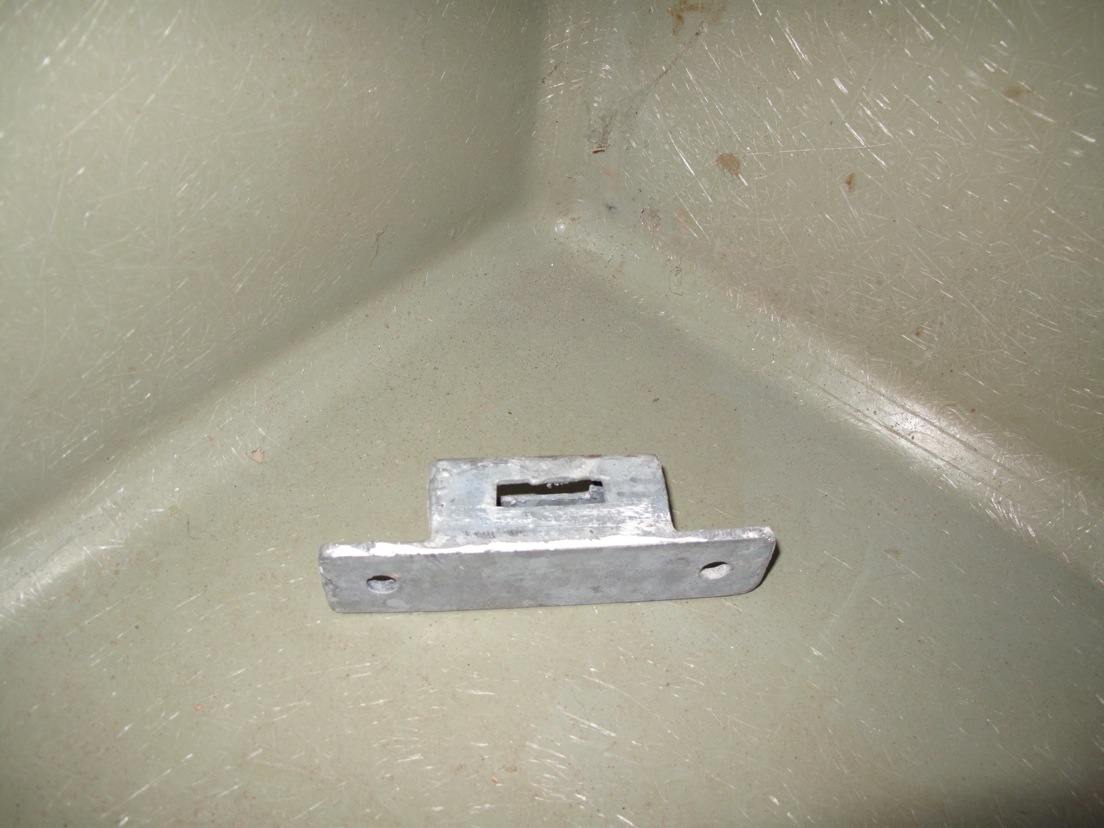
This was at the bottom of the shipment of wood. It seemed light and not in too bad condition. But in the end there was a reason it was a reject. It now hangs on a wall.
Step Two: Draw out your outline
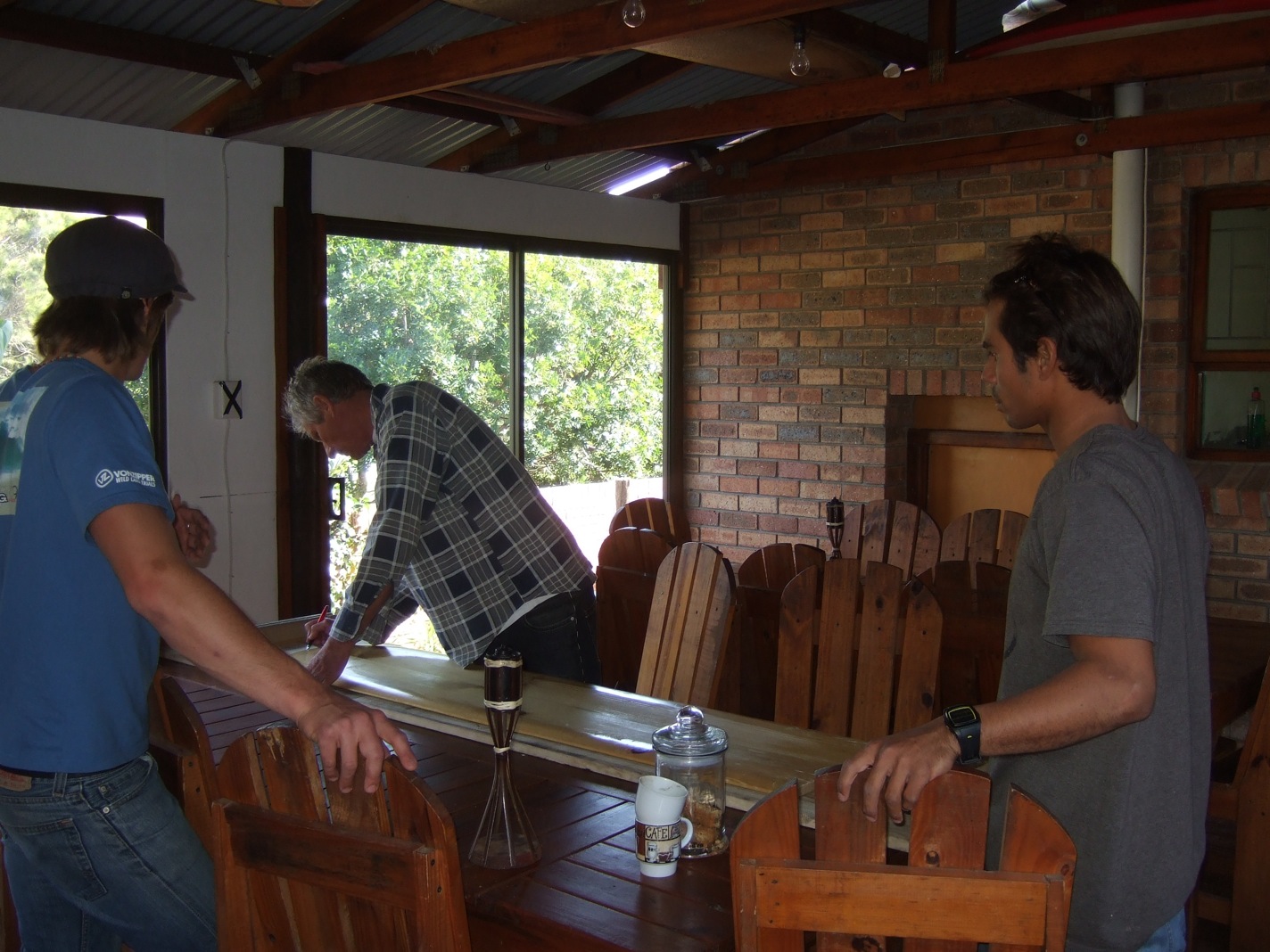 I outlined the board I already had because the one Roscoe made was so awesome. It worked really well except it was made out of pine so it was heavy and paddled poorly. I decided to build it exactly like the original pine one I’d been riding except I was going to add Parabolic rails. I didn’t know how to proceed so I took it over to Des Sawyer for some advice. Des is a legend in Jeffreys Bay, a great shaper giving lots of energy back to the community through his school for recently graduated high school student. Anyways back to it, with a pencil and a steady hand he outlined the board, then we took it to his shaping room. There he took a template off the wall and outlined some parabolic rails for me.
You may be able to get outlines from the internet. Print them out on real size on multiple pieces of paper then tape them together. After that, cut them out and outline your board.
Step Three: Cut out the board
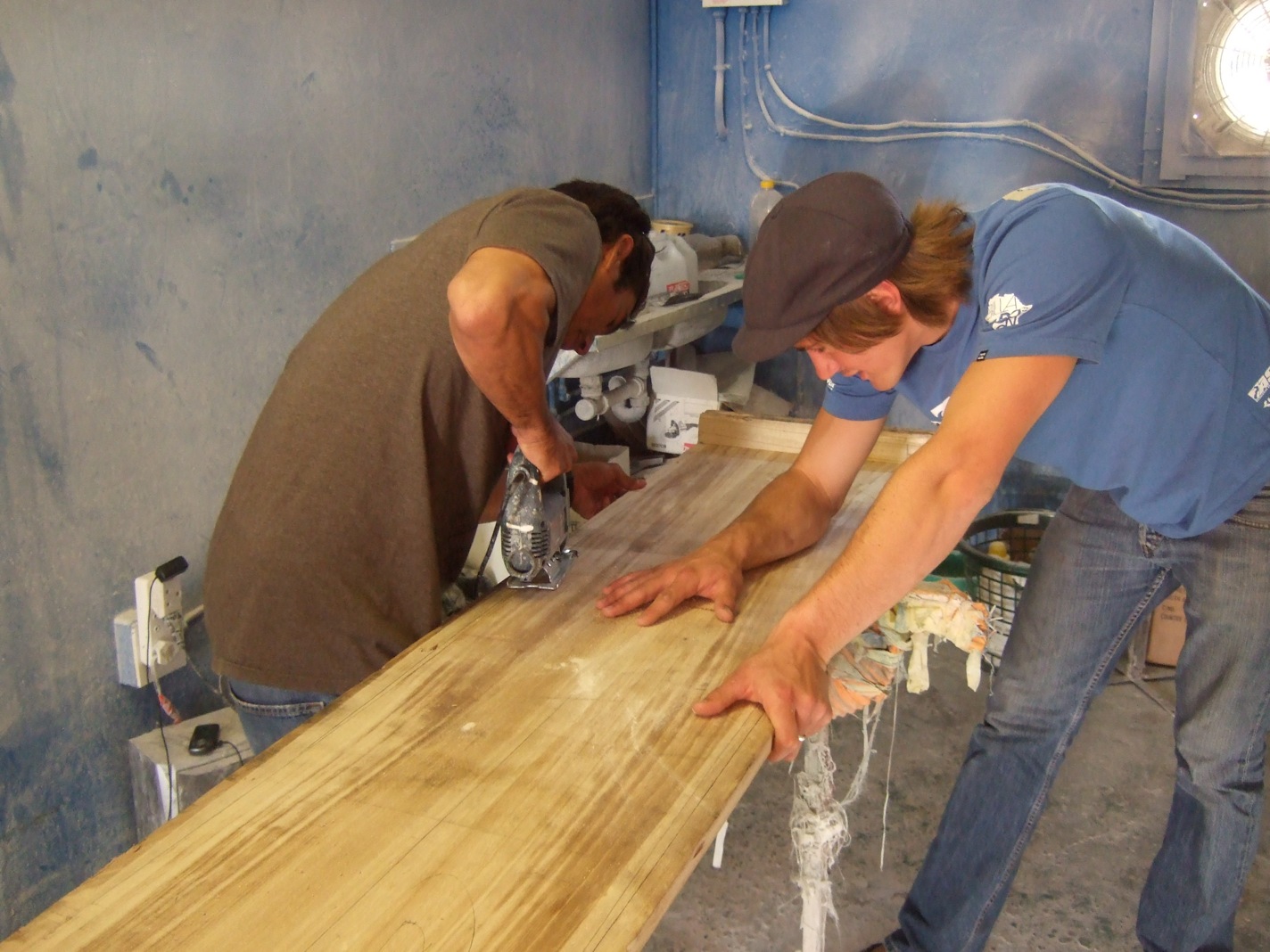
Ludi took me over to the ding repair shop near the township and the guy ( I think his name is Emeil) over there let us use his jigsaw. I cut out the outline on the line. In the future I would cut out just outside of the line and from there grind or sand it down to the line. I ended up making a small mistake but that’s how you learn, I was lucky I didn’t cut too much off. With a bit of sanding I was able to correct the problem.
Step Four: Refine the outline
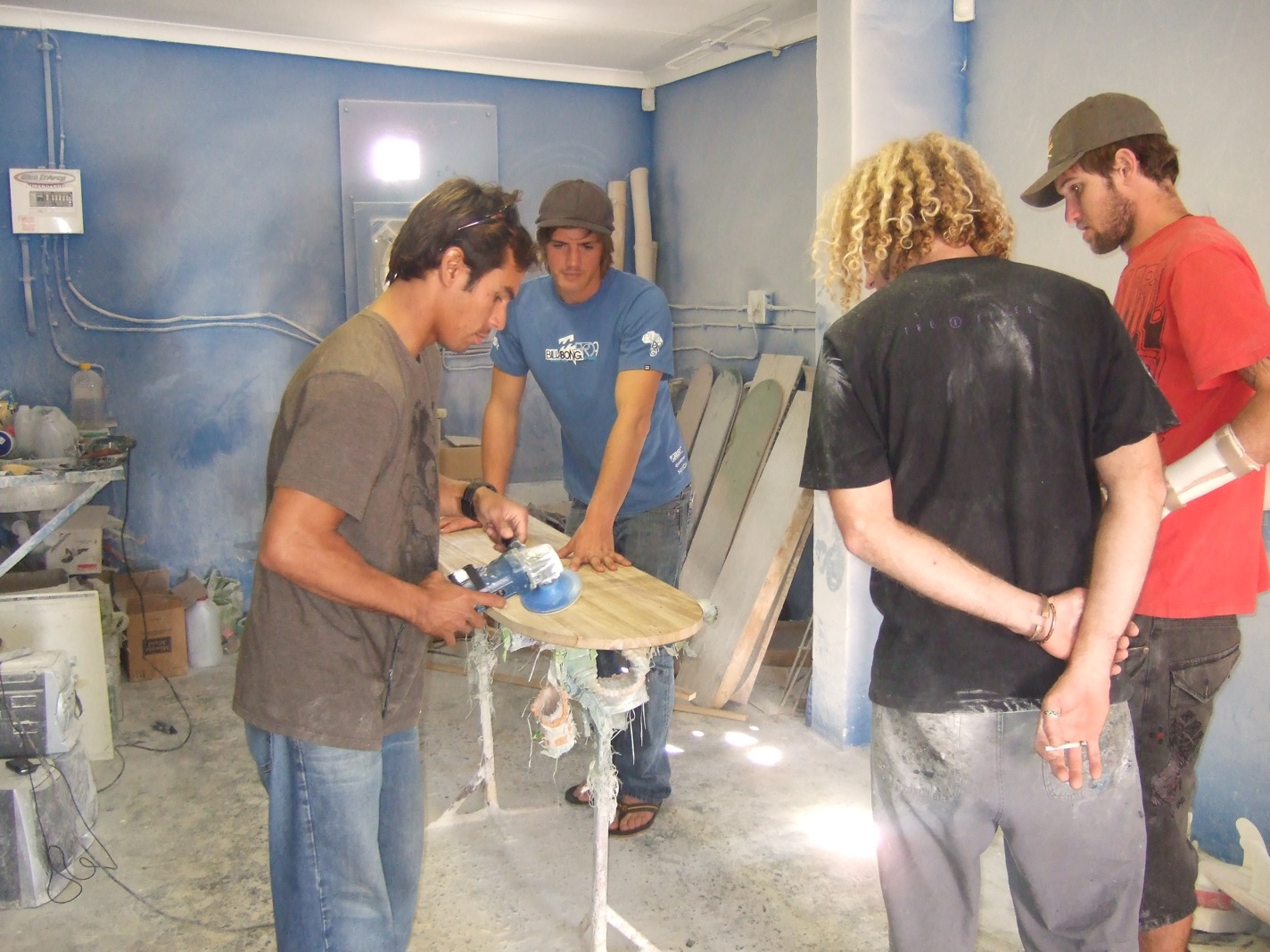
Sand, scrape, or grind down the rails so that they are perfectly matching the outline you originally drew out. I suggested cutting a little bit outside of the line so that you can do this part exactly and avoid cutting inside of the line, then you’ve got a bigger problem to deal with.
Step Five: Decide what rails you want
Figure out how you want your rails, soft or hard. In my case I shaped hard rails (square) from the midsection to the tail and soft rails from the midsection up through the nose. I did this because I figured the soft rails on the nose would allow the board to slide down the face and not grab causing me to get stuck on the higher part of the wave. The hard rails on the mid section to tail would allow me to hold the wave and not slide out. Kinda just guessing.
Step Six: Draw Rails on your board
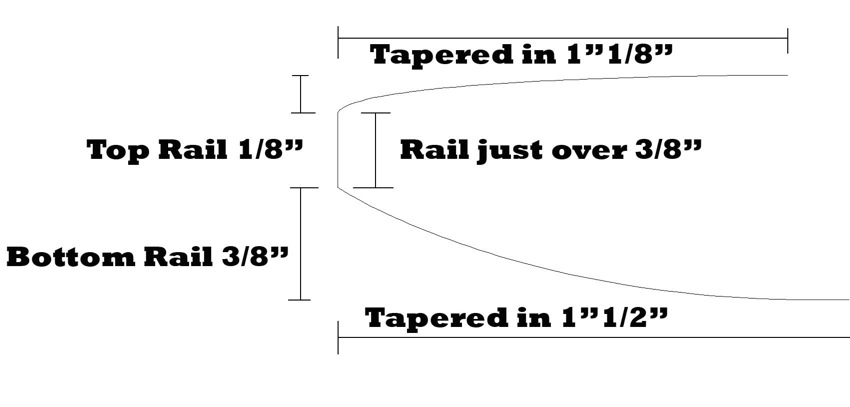
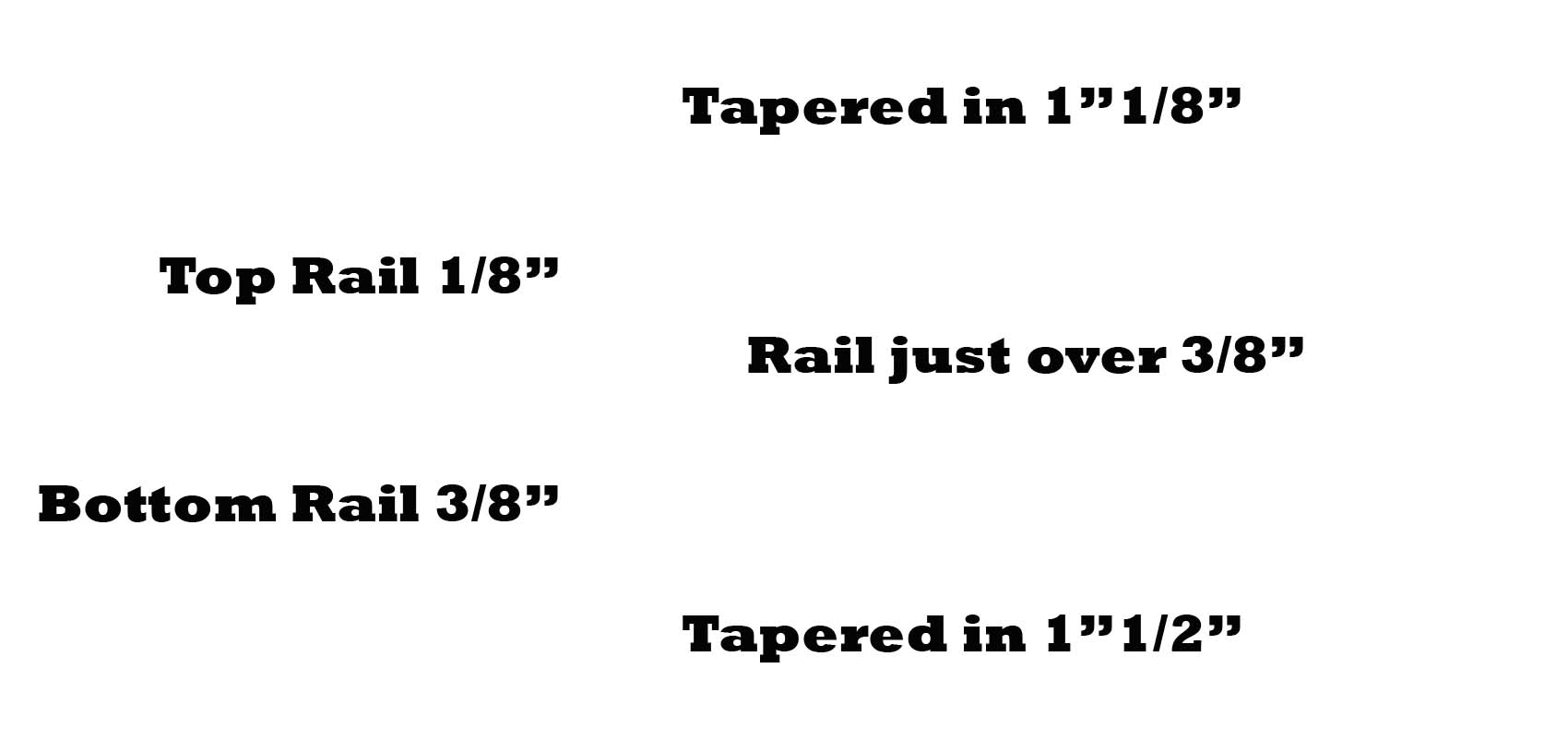
You will want to draw out the rails onto the board so that you can sand down to the pencil marks. You might need to do this multiple times during the shaping process. I chose to taper the rails both on the deck and the bottom. From the top of the deck to the top of my rail I chose 1/8″, from the top of the rail at 1/8″ to the inside of the deck I chose 1″1/8″. The reason I chose these dimensions were because Roscoe did. They worked on the other one, therefore I figured they’d work on this one.
On the bottom rail I chose 3/8″ from bottom of deck to bottom of rail. From bottom of the rail to the inside of the bottom I chose 1″1/2″.
Step Seven: Start Sanding the Rails
I chose to use a grinder with 100 grit. I had never really used one before and found it hard to do at first but once I got the hang of it the tool was no problem. The grinder you use is not so much the important part but the pad you use is. I found a flexipad, it had a large foam block that I put liquid adhesive on one end and liquid adhesive on sandpaper. After a bit of drying I stuck them together and the bond held every time. But I did have to shave down my flexipad because it was too large at first.
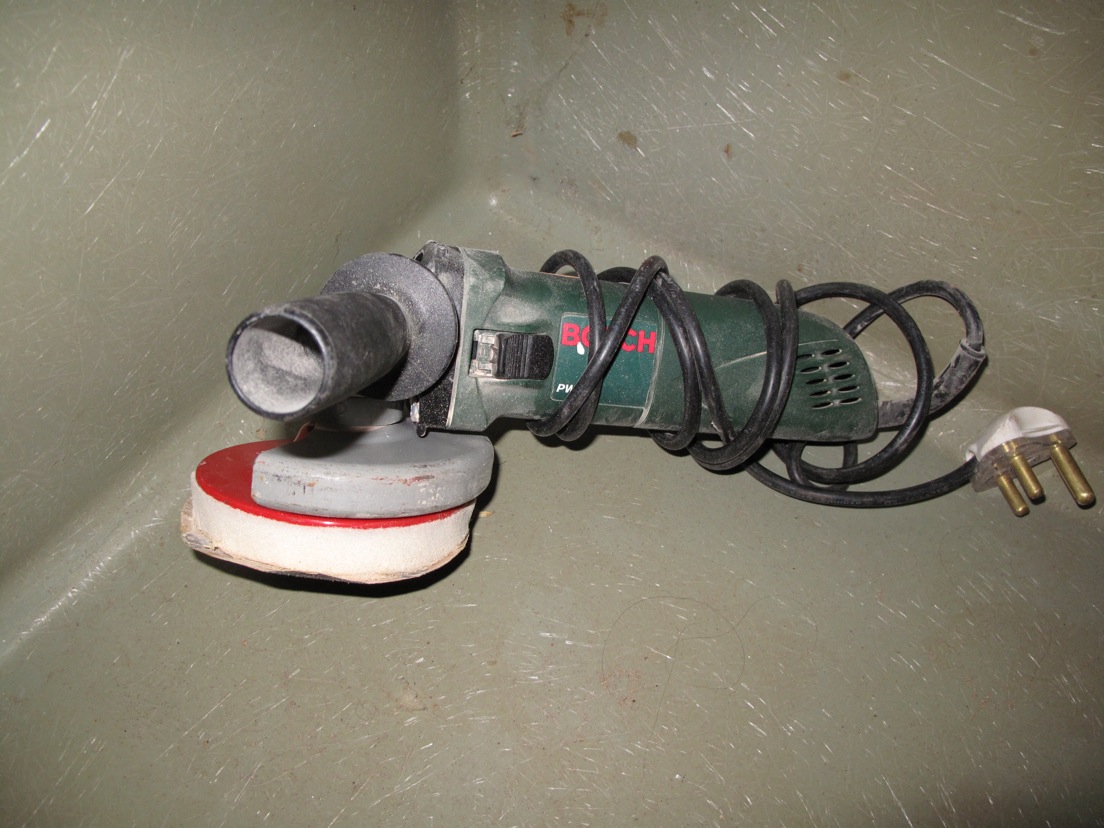
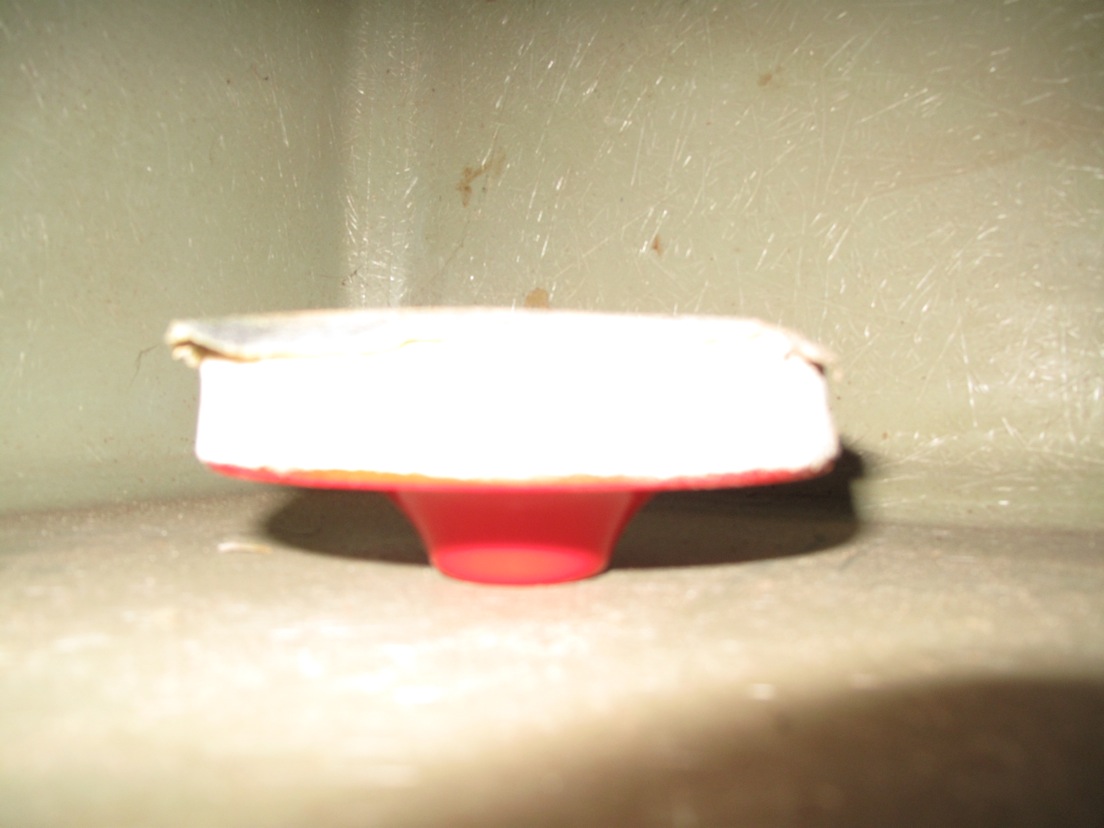
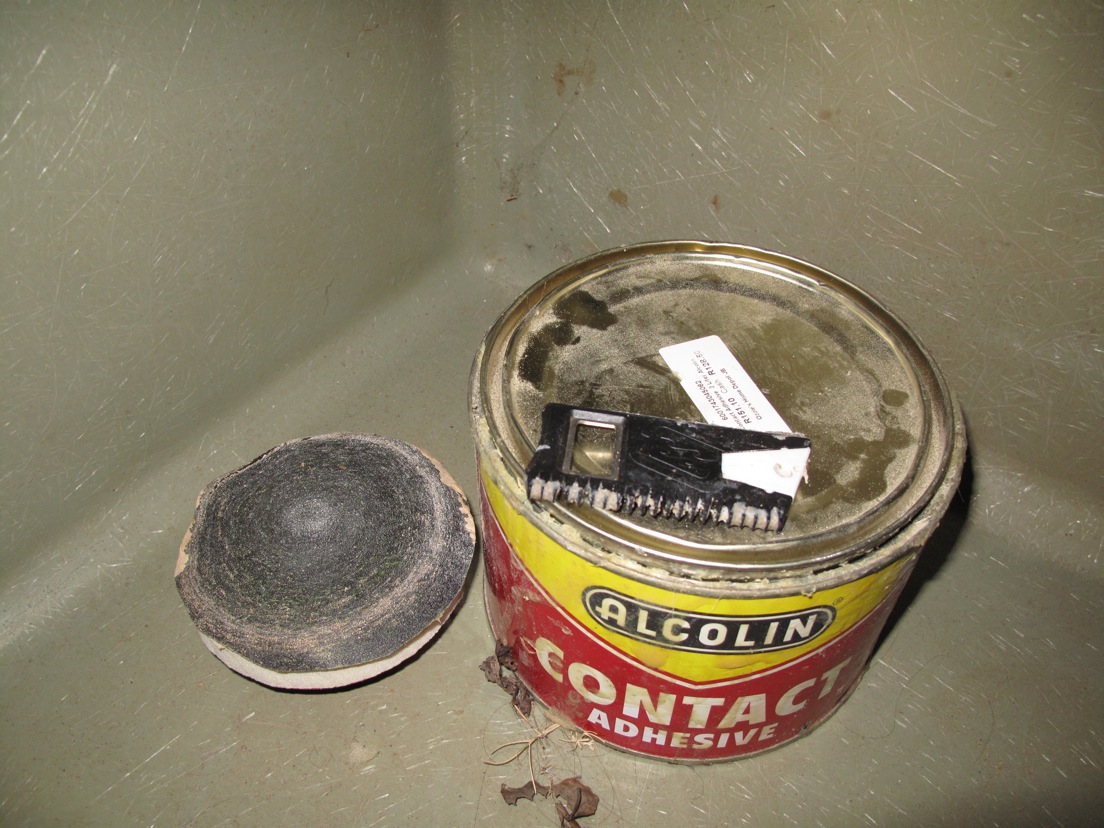
Now begin sanding up and down the board taking the excess off till you are really close to the pencil marks you made. Once you are really close to the pencil marks stop with the grinder. I’ll admit that for parts when I felt I was getting really good with the grinder I did sand down to the pencil marks. But I suggest you don’t because you can mess up and there is no fixing that without rebuilding the rail or making them skinnier.
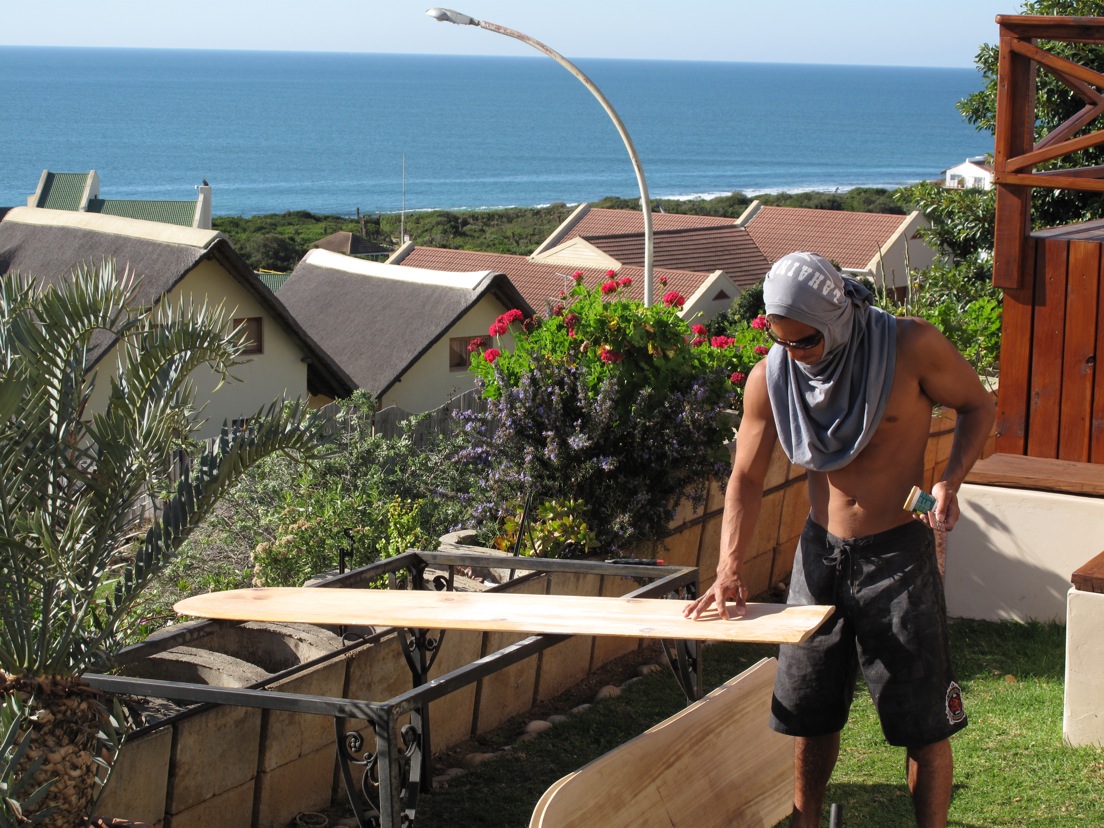
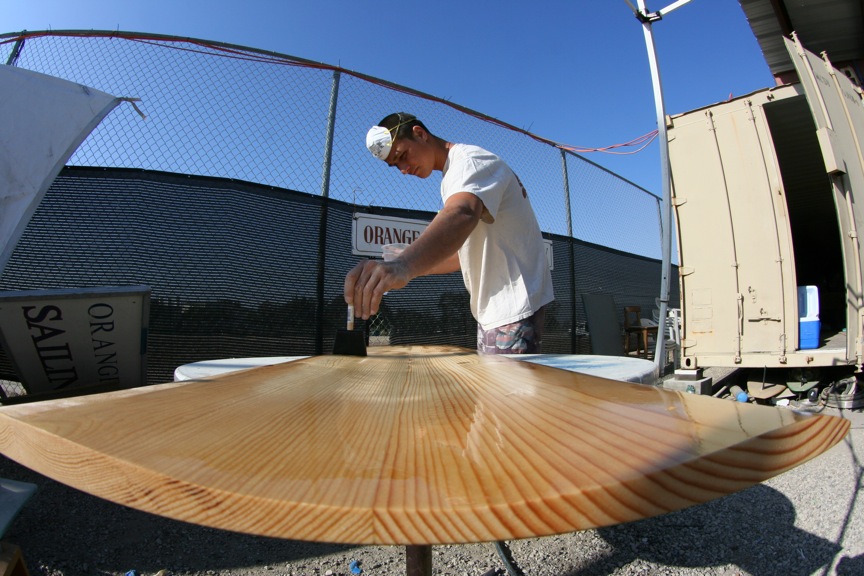
When sanding I created a janky mask with a t-shirt and my sunnies. It helps keep the dust out of your eyes, mouth and nose. Be careful of stuff hanging down like extra shirt or your cord from the ipod. It could get stuck in the grinder and you’d be fucked. This is me doing some ding repair on the pine board using wood filler.
Step Eight: Refine the Rails
I used a vibrating sander at first but then it died. From there I used my hands. I found a piece of metal to serve as a sanding block. Refine the rails so that you match the lines you drew, probably drew out a couple of times.
Step Nine: Concave
I chose a single concave from about the midpoint where the rails go from hard to soft. This is where talking with a shaper would really help. Lucky me, Des Sawyer was out in the Transkei with his crew. So I just winged it! Yeeha. I drew the center line down the board and then drew a line on the tail rail. From there I fired up the grinder again and began going up and down the center line till I had a slightly tapered concave, I also went side to side to create a tapered concave from left to right. I ended with a decent concave, far from perfect, but the bugger works. I’ve seen some Alaias with double concave as well. Tom Wegener even shapes some of his without concave. Hey save yourself some time and don’t bother with a concave. Why did I chose a concave? Besides the fact that Roscoe did, I did some research and magical Google suggested I do it. Google it yourself.
Step Nine and a half: Leash plug
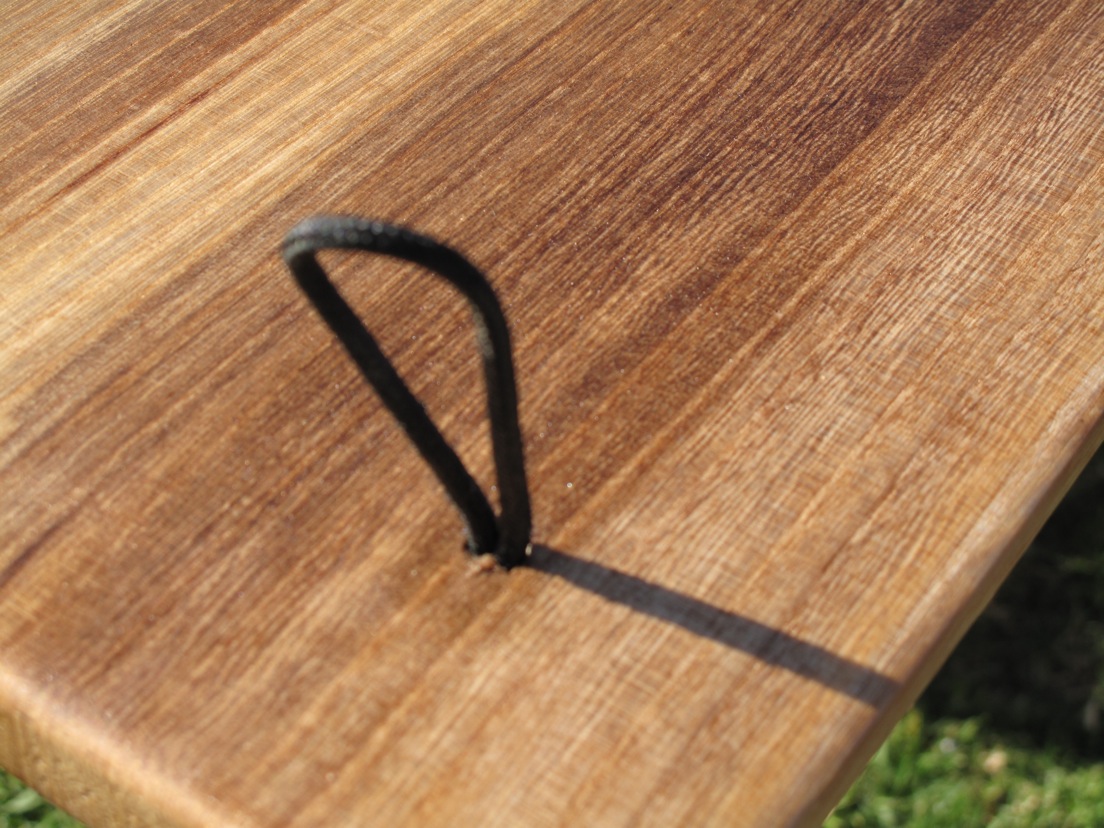
My first Alaia didn’t have one and it would get washed up on the rocks and I ended up breaking it twice. If I wasn’t surfing a rocky point like Jeffreys Bay and surfing a beach break I wouldn’t add this into the Alaia. But considering how expensive the Paulownia wood is I decided to put a plug in. The way I did it was to get two different size drill bits. I drilled one all the way through the board, avoiding the seams (where they were glued together) of the wood. Then I took a larger drill bit and widened the hole so that the knot would fit snugly into the hole without going through the smaller hole. Once the hole was completed and the string was in place without sticking out of the bottom I took the beeswax block and melted, with a lighter, enough wax to fill the hole. I then buffed it flush.
Step Ten: Lower your grit
 What I did was use 100 grit the whole time with the grinder, vibrating sander, and hand sand. But now that you have the board pretty much shaped you will want to smooth out the wood. I transitioned to 180 grit, then straight to 320 because thats all I had. If you can try to go to 220, then 320. just sand it all over smoothing it out. Be sure not to round your hard rails because that can happen when you are trying to smooth out the board. Use a block in order to keep you rails hard and on the soft rails you can just use your hands.
Step Eleven: Mix your sealer
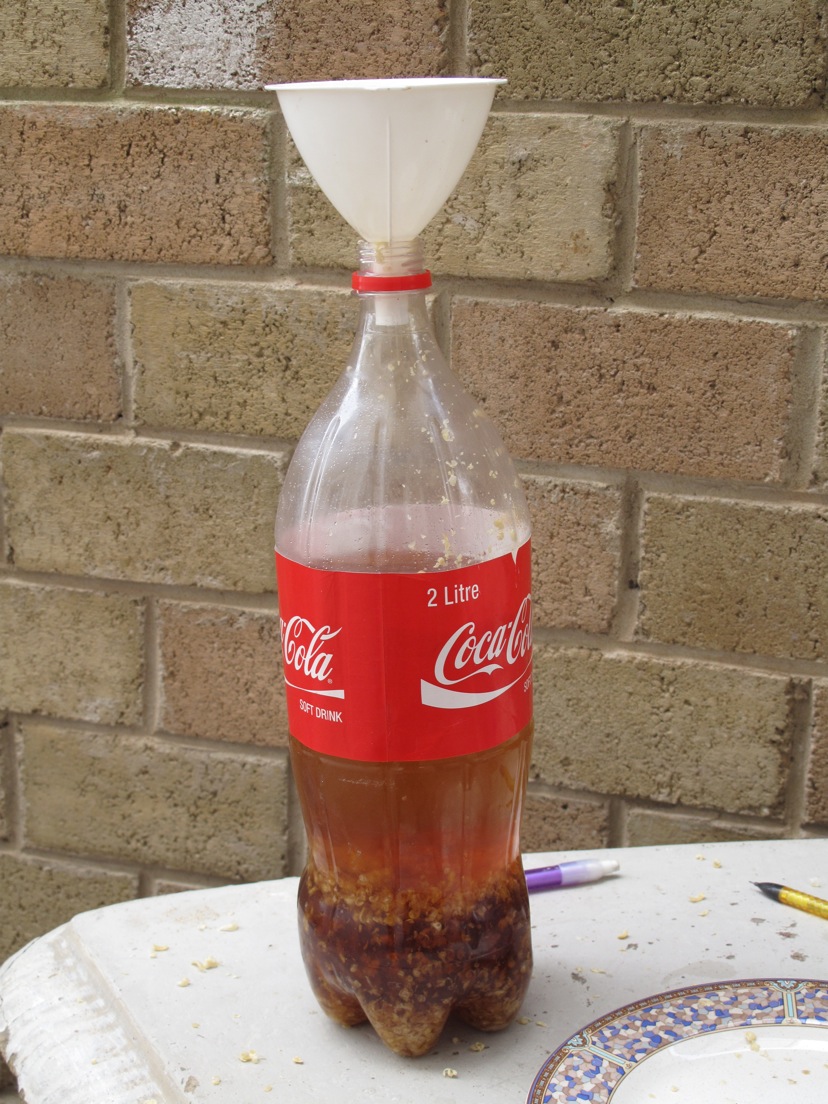
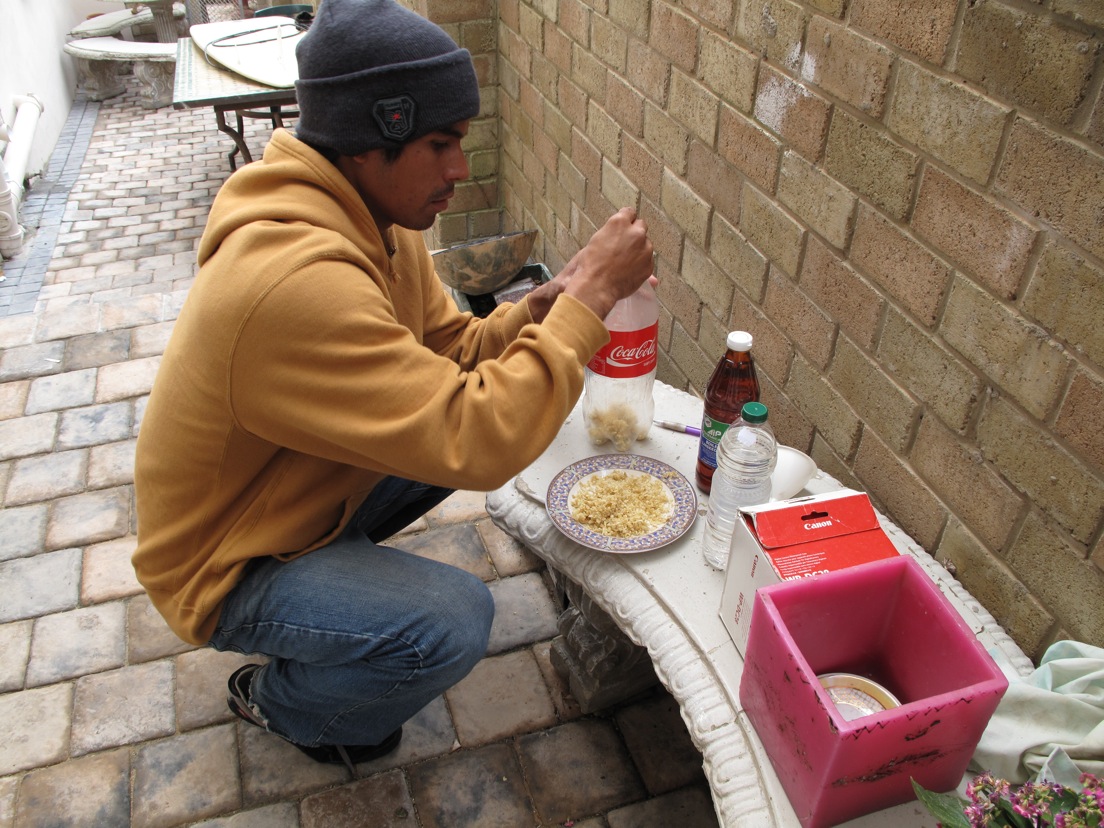
Figuring out what sealer to use can be time consuming as there are so many opinions and options, I just chose to use the one that Tom Wegener has been using.I chose to use a mix of one part boiled linseed oil, one part turpentine (look for gum turpentine, I couldn’t find any so I just used mineral turpentine), and shaved beeswax. I took a stick of beeswax and grated it with a cheese grater. It makes it easier to dissolve in the mixture. I mixed all three in an empty coke bottle. I also let it sit overnight which was hard to do because I wanted to get the Alaia in the water! So I would suggest preparing this right around Step Seven. That way you can get right to business once you are ready.
Step Twelve: Oiling
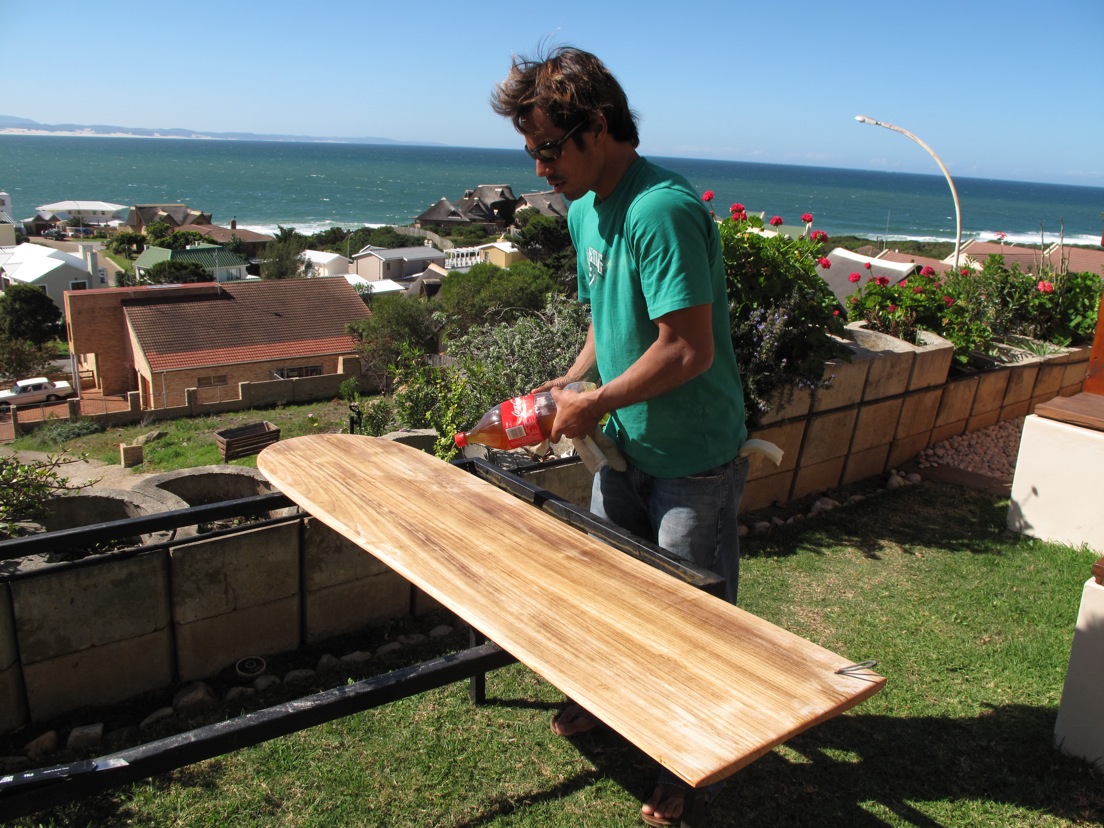
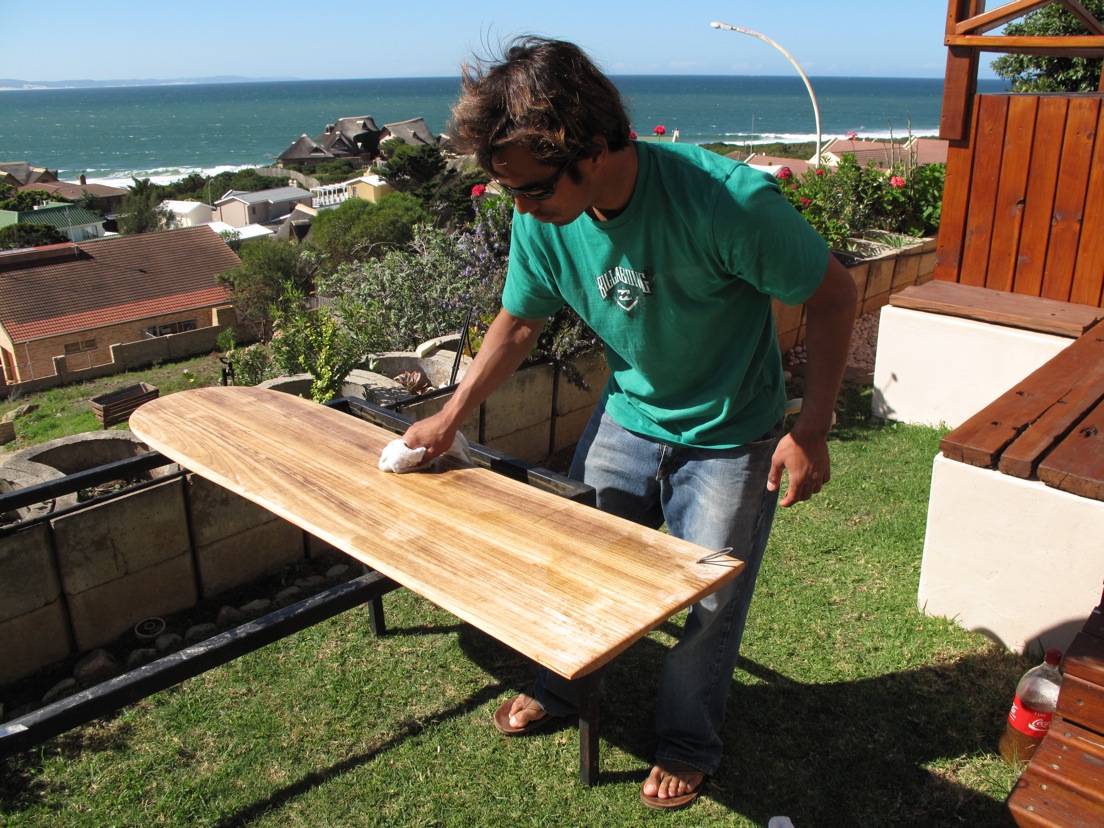
I really had a hard time finding exactly how to do it. The following is what I did, which I think is wrong but it worked. I started dropping copious amounts of the oil onto the board. I drilled a small hole in the top of the coke bottle so that it would spray out, but the wax gets stuck. I just started every hour or so just rubbing the mixture into the wood. But in between the layers I would wipe off the excess oil. I read online to be careful of boiled linseed oil on rags because it could spontaneously combust. I kinda wanted to see it happen but in the end none of my rags spontaneously combusted. Just be careful with the rags is what I am saying I guess. Another tip is in the beginning to get a lot of oil spread across the board, use a piece of cardboard or a squeegee. Let the oil sit and then when most of its dry wipe off the excess and start again.
I did run into the problem during my first surf of the oil not being dry enough. It was really hard to put the wax on. I had to come back in, wipe down the board really well, and then use base coat and then regular wax.
I’ve been oiling it as much as possible. I’ve probably got 10 coats of oil on it now.
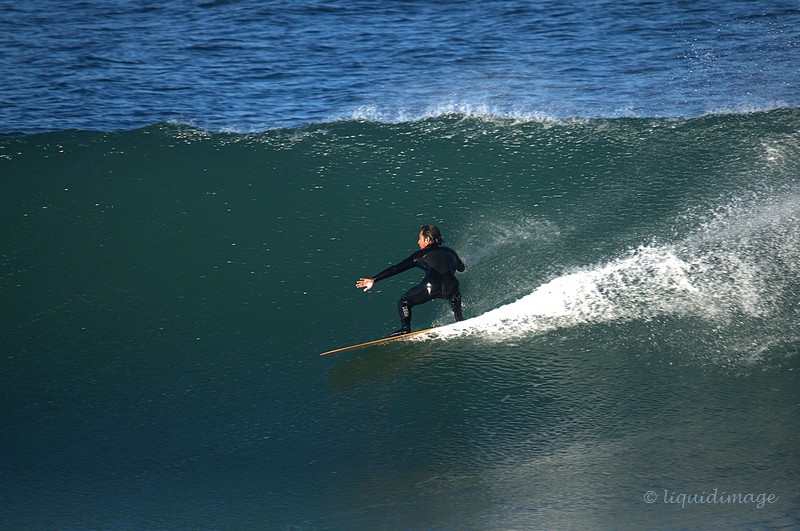
Step 13: The best step! Surf!
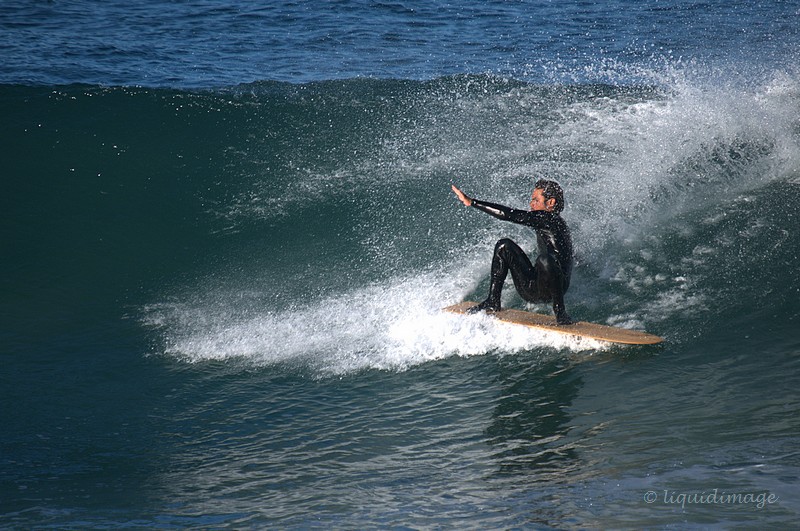
As you can see, the board works.
Post Script:
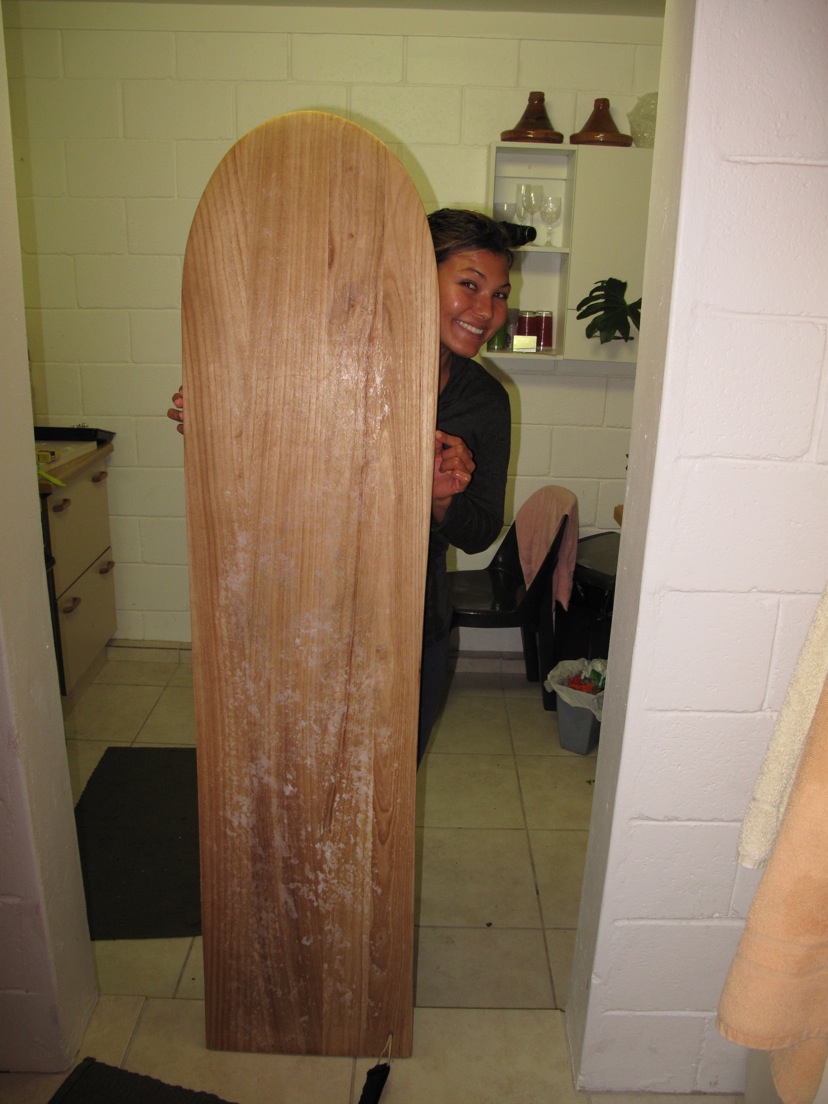
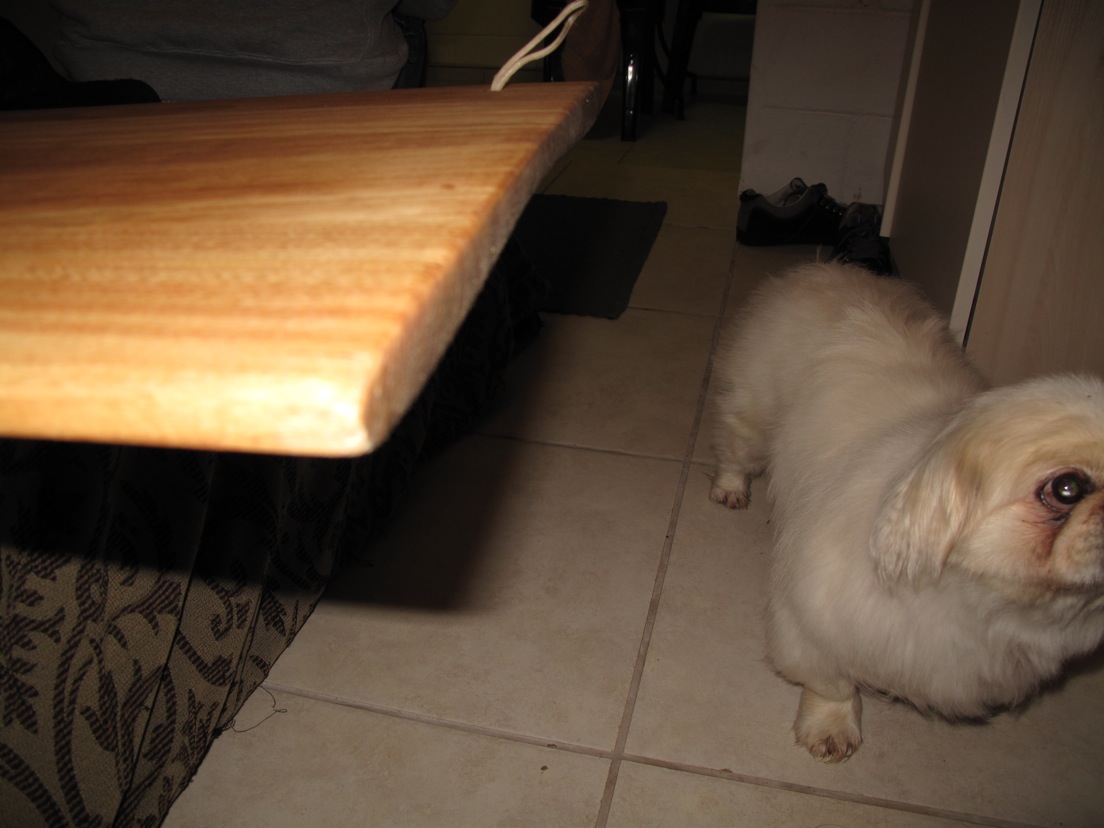
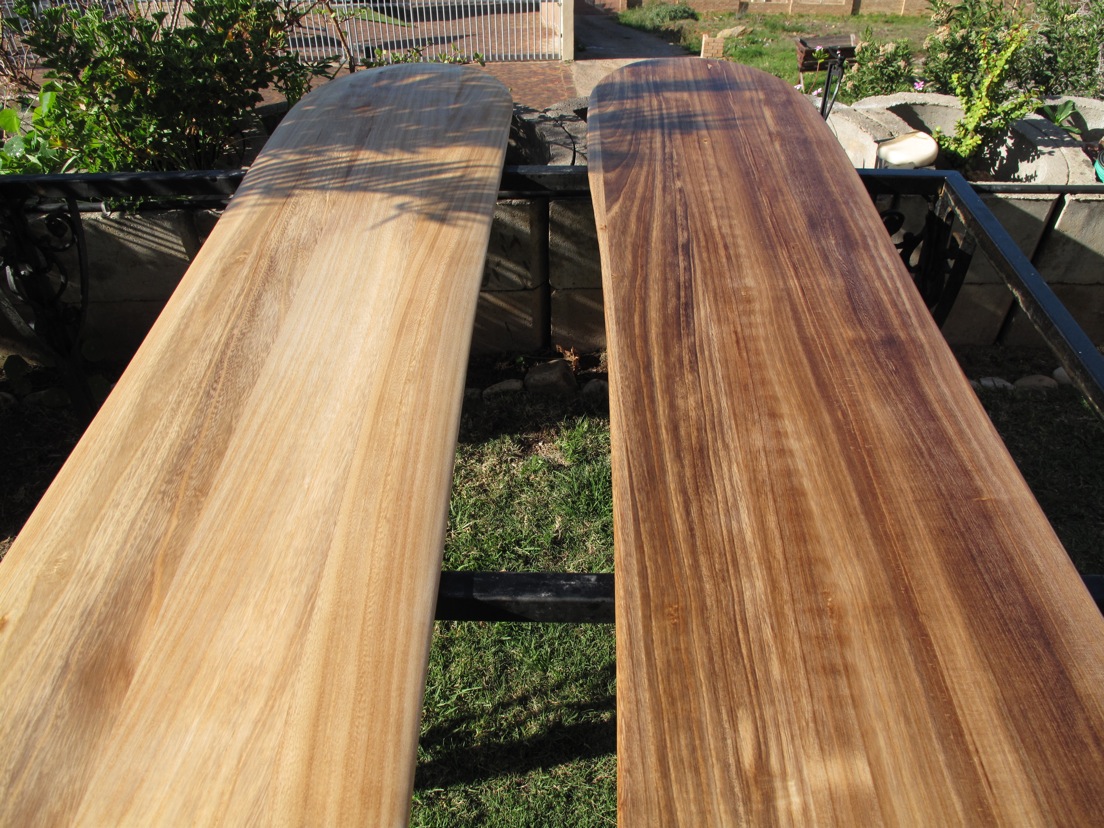
About half way through the process I found a crack going from the top of the board to almost 3/4 of the way to the tail. I was distraught. I took the blank back to Eve and Katrine and they gave me my money back but they also took the board back unfinished. But then a week later they saw the video I put together and decided to give me another blank to give a go at and while I was at it I finished the original board with the crack. What I did was shape two boards simultaneously. The one with the crack was glued together with caskamite glue but it ended up not working anymore once I oiled the board. I think the oil and turp mix broke down the glue. The other board was a perfect blank with no blemishes. The board with the crack is now decoration. After I oiled it, the grain and color are totally different. I think that they were different woods. Anyways, the reject blank is much more beautiful from a color standpoint, but I am afraid if I took it out for a surf I’d break it.
 Scribbles Abroad
Leave a comment